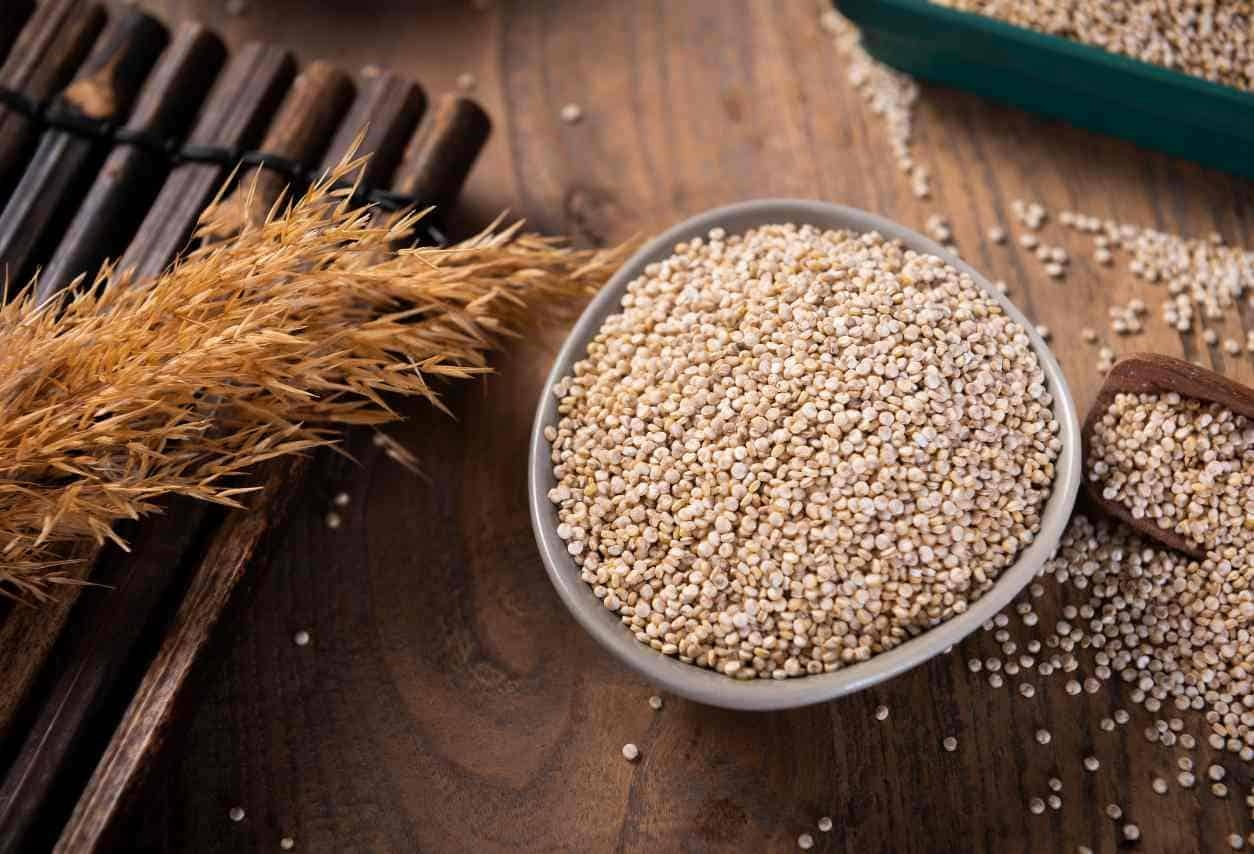
Quinoa (keen-wah) is considered one of the world’s healthiest foods and is a powerhouse of nutrition that offers an array vitamins and minerals in every serving. While it is often referred to as an “ancient grain,” it is actually not a grain or cereal grain but a seed. That makes it gluten free! Learn why I use quinoa in place of rice, and how to cook it.
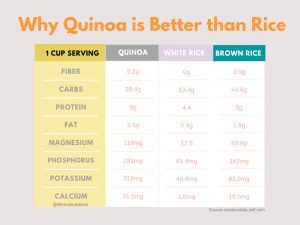
Fiber delays gastric emptying, helps to stabilizer our blood sugars, helps us feel more full and satiated, and can improve intestinal absorption of nutrients.
Fiber adds bulk to the stool by absorbing water, which is especially important for those with diarrhea. Adding bulk also helps to stimulate muscular contractions which increases stool frequency in patients with constipation,
Quinoa is also a complete protein. That is, a protein that contains all of the essential amino acids. Rice is not, and must to be eaten alongside beans/legumes.
White rice does not contain fiber and thus can spike blood sugars rapidly. To find out how it affects you, get a glucose monitor and test your blood one hour after eating. Your blood sugar should return to normal levels two hours after eating. Blood sugar spikes should be avoided in those with Diabetes, metabolic syndrome, and anyone trying to lose weight.
Minerals, also known as electrolytes, are the spark plugs of our bodies! Without them, many chemical reactions would not happen.
Fat helps us feel full. When fats reach the small intestines, it stimulates a strong feedback signal associated with slowing gastric emptying and suppressing food intake by the release of various satiety hormones, cholecystokinin (CCK) and peptide YY (PYY).
It’s the only thing quinoa and rice have in common.
Quinoa is a seed that contains lectins, or anti-nutrients, that act as the plant’s system of self-defense. These include saponins, phytic acid, tannins, and trypsin inhibitors that must be eliminated before the consumption. When these remain, it can lead to bitter taste, digestive discomfort and bloating. Other toxic effects include irritation to the gut lining (leaky gut syndrome) and blocking absorption of certain vitamins and minerals. Thus, quinoa must be prepared properly by soaking for a minimum of 7 hours and rinsed well before cooking. The lectins end up down the drain instead!
Ingredients:
Recipes to Try:
Mediterranean Quinoa Salad Recipe
Baked Quinoa with Apples Recipe
Thanks for reading,
Dr. Loredana
Every patient starts with a complimentary 15-minute call with Dr. Loredana.
Book complimentary call